

A turtleneck can look polished without requiring a complicated outfit. The secret is usually less about following a strict formula and more about choosing the right weight, proportion, and layers. Good turtleneck styling can turn familiar pieces such as jeans, trousers, button-down shirts, dresses, blazers, and coats into outfits that feel intentional without looking overworked.
The turtleneck has remained remarkably adaptable over time. High-neck garments have practical roots in clothing designed for warmth and protection, while the knitted turtleneck became a staple of modern wardrobes during the 20th century. Its appeal has lasted because the basic shape works across casual, professional, minimalist, and dressier outfits.
Today, the easiest way to wear one is to treat it as either the foundation of an outfit or a visible layer. A thin turtleneck can disappear underneath another garment, while a heavier knit can become the main feature. Once that distinction is clear, surprisingly few pieces can create a wide range of combinations.
Start With The Right Turtleneck
Before adding layers, consider the turtleneck’s shape. A fitted, fine-gauge style behaves very differently from a chunky oversized sweater. A thin ribbed version can slip underneath a shirt or jacket without creating much bulk, while a thick knit generally works better as the outermost sweater layer.
The neckline matters, too. A traditional folded turtleneck gives a more defined, structured appearance around the face. A mock neck creates a similar vertical line but usually feels less substantial. The choice can depend on personal comfort, the rest of the outfit, and how much visual weight is already present around the shoulders and neck.
Choose Fine Knits For Layering
Thin merino, cotton, modal, or other lightweight knits are particularly useful when the turtleneck will sit beneath another garment. The flatter surface makes it easier to add a button-down shirt, blazer, dress, or coat without creating uncomfortable bunching.
Lightweight turtlenecks are also useful when an outfit needs another layer without significantly changing its silhouette. A close-fitting knit can add warmth and visual definition while letting the outer garment keep its original shape.
Save Chunkier Knits For Simpler Outfits
A chunky turtleneck already has considerable visual weight. Adding several additional heavy layers can make an outfit feel crowded, particularly around the shoulders and upper body.
Instead, pair a substantial knit with simpler pieces. Straight-leg jeans, tailored trousers, a streamlined skirt, or a relatively light coat can provide enough contrast. The goal is not to make every part of the outfit equally oversized.
Easy Turtleneck Styling Combinations For Everyday Outfits
The most useful combinations are often built around clothes that are already in the closet. A turtleneck does not need to be paired with other obviously winter-oriented pieces. Its high neckline can give casual outfits a sharper finish while staying comfortable.
Turtleneck With Straight-Leg Jeans
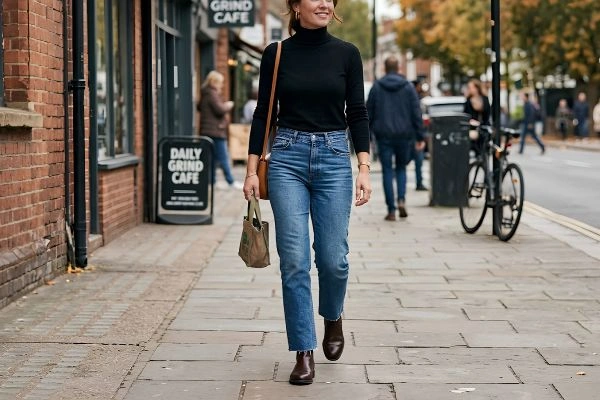
A fitted turtleneck and straight-leg jeans are one of the simplest combinations to build. The relatively close-fitting top creates a clean line through the torso, while straight-leg denim provides enough structure without making the outfit feel overly formal.
Black, cream, gray, navy, and brown turtlenecks pair especially easily with denim. For a relaxed outfit, add sneakers or flat boots. Loafers or ankle boots can make the same combination look more polished.
An oversized turtleneck can work with straight-leg jeans as well, but proportion becomes more important. Rather than adding another loose layer, keep the footwear and outerwear relatively streamlined.
Turtleneck With Wide-Leg Trousers
Wide-leg trousers provide an easy way to create contrast with a fitted turtleneck. The narrow upper silhouette and wider lower half create a defined shape without requiring a belt or elaborate styling.
The same idea can work in reverse with a slightly relaxed turtleneck, as long as the trousers have enough structure to keep the outfit from becoming shapeless. A partial tuck can help establish the waist when the sweater is long enough to create excess fabric.
For a particularly clean look, keep the colors close together. A black turtleneck with charcoal trousers creates a continuous vertical effect. A cream turtleneck with beige trousers offers a softer interpretation of the same concept.
Turtleneck With A Denim Skirt
A turtleneck can make a denim skirt feel less summery and better suited to transitional weather. A fitted knit works especially well with an A-line or straight denim skirt because the combination balances structure with softness.
The footwear can change the entire mood. Sneakers make the outfit casual, while loafers or boots make it more refined. With a longer skirt, a shorter or tucked turtleneck can help maintain visual proportion.
Turtleneck With Tailored Shorts
A lightweight turtleneck does not have to be reserved for cold weather. Paired with tailored shorts, it can create a transitional outfit for cooler mornings, air-conditioned environments, or mild weather.
This works best when the turtleneck is relatively thin. Heavy wool or chunky knits can look disconnected from the lighter lower half. Loafers, ballet flats, or sleek sneakers can keep the combination cohesive.
Layer A Turtleneck Under A Shirt
One interesting way to style a turtleneck is to wear a lightweight turtleneck under a button-down shirt. It adds a visible neckline while keeping the shirt as the dominant outer layer.
The simplest version uses a plain turtleneck beneath an open or partially buttoned shirt. The high neckline becomes a deliberate detail rather than something hidden beneath the collar.
Use A Crisp Button-Down For Contrast
A crisp white or blue button-down creates a noticeable contrast against a black, brown, gray, or colored turtleneck. Leaving some buttons open keeps the high neckline visible instead of hiding it completely.
For a relaxed outfit, the shirt can remain untucked. For a more structured appearance, tuck it into trousers or a skirt.
A patterned shirt can work, too, but the easiest starting point is a solid shirt with a simple turtleneck. Once the proportions feel comfortable, subtle stripes or checks can introduce more visual interest.
Try The Turtleneck Under An Oversized Shirt
An oversized button-down can create a softer, more contemporary silhouette. The turtleneck gives the open shirt a defined neckline, while the looser outer layer provides movement.
This is particularly useful when the shirt would otherwise feel too casual on its own. The turtleneck becomes the visual anchor that holds the outfit together.
Wear A Turtleneck Under A Blazer
A turtleneck-and-blazer combination is one of the easiest ways to make an outfit look polished without relying on a traditional collared shirt. It works for office wear, dinners, travel, and occasions where a full suit feels too formal.
The main consideration is fabric thickness. Fine-gauge turtlenecks generally sit more comfortably under fitted tailoring. A bulky sweater may work under a deliberately oversized blazer, but it can become restrictive beneath a close-fitting jacket.
Pair A Black Turtleneck With Tailoring
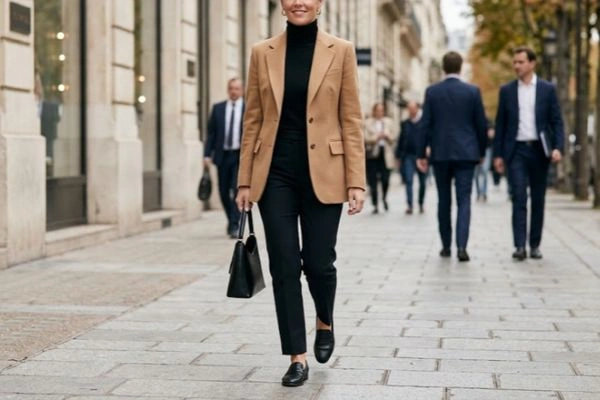
A black turtleneck under a blazer is a dependable combination because the simple neckline doesn’t compete with lapels or tailoring details. Black trousers create a monochromatic base, while a contrasting blazer adds definition.
Gray, camel, navy, brown, and subtle checks are easy blazer choices. The same formula can also be reversed with a lighter turtleneck and darker tailoring.
Use Wide-Leg Pants For A Modern Proportion
A fitted turtleneck with wide-leg trousers and a blazer creates contrast between the narrow neckline and broader lower silhouette. This looks especially balanced when the blazer has some structure but isn’t extremely fitted.
A tucked turtleneck helps maintain a clear waistline. If the sweater is cropped or naturally short, leaving it untucked may work just as well.
Put A Turtleneck Under A Dress
A lightweight turtleneck can extend the usefulness of a sleeveless or short-sleeved dress into cooler conditions. It also changes the appearance of a familiar dress without requiring permanent alterations.
The combination works best when the turtleneck is thin enough to sit smoothly under the dress. This keeps the dress’s original shape visible instead of creating unnecessary bulk.
Layer Under A Slip Dress
A fine turtleneck under a slip dress creates contrast between the close-fitting knit and the dress’s smoother, lighter look. Black under a neutral or darker slip dress produces a subdued effect, while a contrasting color makes the neckline more noticeable.
The turtleneck’s thickness matters. A bulky sweater can distort a dress’s fit, especially around the armholes and waist.
Try A Turtleneck Under A Sleeveless Dress
A structured sleeveless dress can also work with a thin turtleneck underneath. This approach is particularly useful for dresses that already have a defined shape.
Keep the layering piece relatively simple if the dress has a strong print or unusual neckline. A plain turtleneck keeps the dress as the focal point.
Pair A Turtleneck With A Skirt
Skirts provide another opportunity to play with proportion. Tuck a fitted turtleneck into a fuller skirt to create a clear distinction between the upper and lower halves of the outfit.
A pencil or column skirt creates a more streamlined silhouette. A pleated or A-line skirt creates more volume and movement.
Try A Midi Skirt And Ankle Boots
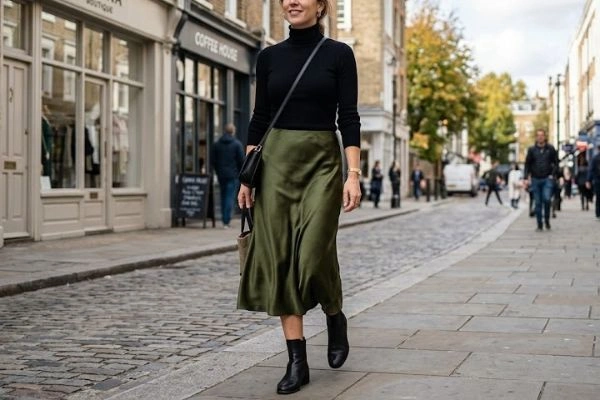
A midi skirt, fitted turtleneck, and ankle boots form a practical combination because each piece occupies a distinct part of the silhouette. The tucked sweater defines the upper body, the skirt provides volume or length, and the boots finish the lower line.
The formula does not require matching colors. A neutral turtleneck can anchor a patterned skirt, while a colorful sweater can bring interest to an otherwise simple outfit.
Use A Satin Skirt For Texture Contrast
A satin or similarly smooth skirt can create an interesting contrast with a ribbed or matte turtleneck. The difference in surface texture adds depth without requiring multiple colors or patterns.
Keep the rest of the outfit restrained. Simple shoes and understated accessories are usually enough because the fabric contrast already does much of the visual work.
Build A Monochromatic Turtleneck Outfit
One of the easiest ways to make a turtleneck look sophisticated is to keep much of the outfit within the same color family. This does not mean every piece must be the same shade.
A charcoal turtleneck can be worn with slightly lighter gray trousers and a dark gray coat. Cream pairs well with ivory and beige. Brown can range from chocolate to camel to tan.
The effect works because the turtleneck creates a continuous visual line around the neck and torso. Similar-color outfits can also feel more dimensional when different fabrics and finishes are combined.
Mix Textures Instead Of Adding More Colors
When an outfit uses similar colors, texture matters more. A ribbed turtleneck with wool trousers, suede shoes, or a smooth leather bag gives the eye several surfaces to distinguish.
This is often more effective than adding several contrasting colors. The result feels coordinated without appearing overly matched.
Add A Coat Without Overcomplicating The Outfit
A turtleneck naturally suits coats because the high neckline fills the space around the collar. It works under trench coats, wool coats, peacoats, leather jackets, and other outerwear.
The best pairing depends on the sweater’s thickness. Fine knits fit well under structured coats. Chunky turtlenecks usually need a roomier outer layer.
Turtleneck And Trench Coat
A lightweight turtleneck beneath a trench coat creates a useful transitional outfit. The high neckline offers more coverage than a T-shirt, while the trench keeps the look structured.
Neutral combinations such as black with beige, cream with camel, or navy with khaki are particularly easy to wear.
Turtleneck And Leather Jacket
A slim turtleneck under a leather jacket combines a soft knit texture with a harder outer surface. Black-on-black is an obvious choice, but brown leather with cream, gray, or burgundy can create a warmer look.
Because the jacket already has visual character, simple trousers or denim are usually enough underneath.
Common Turtleneck Styling Mistakes To Avoid
A turtleneck is versatile, but some combinations become uncomfortable or visually heavy when too many bulky pieces are stacked together.
One common issue is wearing a thick turtleneck beneath a tightly fitted blazer or coat. The result can restrict movement and create unwanted bunching around the shoulders and arms. A thinner knit is usually a better choice for close-fitting layers.
Another issue is ignoring proportions. An oversized sweater with very wide trousers can work, but the outfit needs some intentional structure. A tucked section, visible waistline, shorter hem, or structured footwear can prevent the silhouette from becoming overwhelming.
Also consider the neckline itself. If a full turtleneck feels restrictive, a mock neck can provide a similar visual effect with less fabric around the neck. The best outfit stays comfortable enough to wear for several hours.
Easy Outfit Formulas To Keep In Mind
For anyone who wants simple starting points rather than a large wardrobe overhaul, these combinations cover most situations:
- Casual: fitted turtleneck + straight-leg jeans + sneakers
- Polished casual: turtleneck + wide-leg trousers + loafers
- Office: fine turtleneck + tailored trousers + blazer
- Layered: thin turtleneck + button-down shirt + trousers
- Feminine: fitted turtleneck + midi skirt + ankle boots
- Dressy: fine turtleneck + slip dress + structured coat
- Minimal: tonal turtleneck + matching trousers + simple outerwear
- Cold weather: chunky turtleneck + straight jeans + roomy coat
These formulas are starting points, not strict rules. Changing the shoe, adding a belt, adjusting the tuck, or switching from a fitted to an oversized layer can substantially alter the final look.
Keep Turtleneck Outfits Simple
The easiest turtleneck styling combinations are not necessarily the most elaborate. A thin turtleneck under a button-down shirt, a fitted knit with wide-leg trousers, or a simple sweater underneath a blazer can completely change the appearance of familiar wardrobe staples. The most important factors are usually fabric weight, proportion, and how much visual competition exists between the layers.
A turtleneck also gives plenty of room for personal interpretation. It can make jeans look more polished, soften tailoring, add interest to a simple dress, or provide a strong color accent beneath a neutral coat. Start with pieces already in the wardrobe, choose layers that fit comfortably together, and let one element provide the main visual focus. That approach makes the turtleneck much easier to wear and far more versatile than it might initially appear.