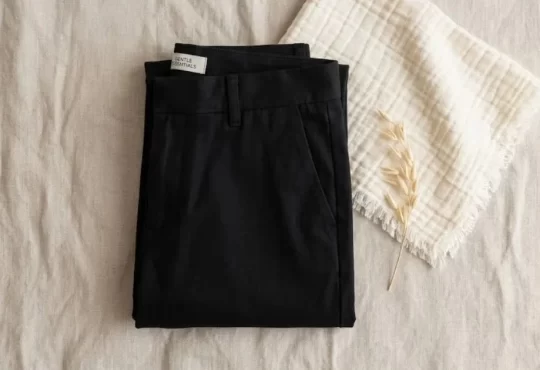


Building a wardrobe that looks good, feels comfortable, and lasts starts with choosing the right everyday clothes. A plain T-shirt, black trousers, a white button-down shirt, or a simple sweater may seem unremarkable, but these are the pieces worn repeatedly and combined with different outfits. Investing in high-quality basics can simplify getting dressed, reduce unnecessary replacements, and deliver better value over time.
The challenge is that clothing quality is not always obvious. A high price does not guarantee excellent construction, and a soft fabric may lose its shape after washing. Even minimalist designs can conceal weak seams, poor finishing, or uncomfortable cuts.
To identify well-made clothing, examine the fabric, stitching, fit, finishing, hardware, and care requirements. These nine details can help distinguish durable wardrobe essentials from garments that merely look impressive on the hanger.
1. Examine the Fabric Beyond Its Initial Feel
Check Weight, Density, and Opacity
Hold the garment up to the light, feel the material, and observe how it drapes. Look for consistent density, appropriate opacity, and a surface free from unexplained thin patches or obvious defects.
Fabric weight should suit the garment’s purpose. Lightweight Cotton works well for warm weather, while heavier jersey may provide more structure. Neither is automatically better. A lightweight linen shirt can be excellent quality, while a thick T-shirt may still have weak construction.
Pay attention to how the fabric hangs. It should behave as expected for its design rather than twisting or bunching awkwardly.
Understand Different Fiber Properties
Fiber content offers clues about comfort, performance, and maintenance.
- Cotton: Comfortable, moisture-absorbent, and commonly used for casual shirts and trousers.
- Linen: Breathable and well suited to warm weather, although it wrinkles readily.
- Wool: Useful for warmth and naturally resilient in sweaters and tailored clothing.
- Polyester: Often valued for wrinkle resistance, durability, and quicker drying.
- Elastane: Adds stretch to fitted garments and helps them move with the body.
Blended fabrics can combine useful characteristics. However, fiber composition alone does not determine quality. Yarn quality, fabric construction, finishing, and sewing all influence how long a garment lasts.
Choose materials that suit your climate, intended use, and willingness to maintain them.
2. Read the Label Instead of Trusting the Marketing
Look Beyond Words Like Premium and Luxury
Terms such as premium, luxury, and elevated are marketing descriptions rather than standardized measures of quality.
Check the fiber-content label and read the percentages. A cotton-rich shirt may contain polyester or elastane, which is not necessarily a disadvantage. Knowing the composition helps you understand the garment’s likely characteristics and care needs.
In the United States, most covered textile products must disclose fiber content, country of origin, and the responsible manufacturer or marketer. Requirements vary by country so that local labeling rules may differ.
Labels indicate a garment’s material composition, not its manufacturing quality. Even a 100% cotton shirt can have weak stitching or shrink considerably after washing.
Check Care Instructions Before Buying
Care requirements affect the long-term practicality of everyday clothing. A sweater that needs hand-washing may be inconvenient if you prefer machine-washable garments. A shirt that requires frequent ironing may not suit a low-maintenance wardrobe.
Read instructions for washing, drying, ironing, and specialist cleaning before purchasing. The best garment is not necessarily the one with the simplest care requirements, but one you can realistically maintain.
Following the recommended care instructions also helps preserve fabric appearance, shape, and construction.
3. Inspect the Stitching and Seams
Look for Even, Secure Stitches
Turn the garment inside out and inspect the seams along the shoulders, sleeves, sides, waistband, and crotch.
Look for consistent stitching without unexplained gaps, loose loops, dangling threads, or puckered fabric. The seams should hold the fabric firmly together without pulling or distorting the garment.
Pay particular attention to areas that experience tension. Shoulder seams on T-shirts, underarm seams on shirts, and crotch seams on trousers are especially worth checking.
Neat stitching is encouraging, but appearance alone cannot guarantee strength. The construction should suit the garment’s intended use.
Check Reinforcement at Stress Points
Some garments benefit from additional stitching or reinforcement where strain is concentrated. Jeans may have reinforced pocket openings, while shirts and T-shirts may use shoulder tape to help stabilize seams.
These details can improve durability, but reinforcement is not necessary everywhere. A lightweight summer blouse does not need the same construction as work trousers.
Look for practical strength rather than an impressive stitch count. Well-made basics balance durability, flexibility, and comfort.
4. Examine Hems, Edges, and Finishing
Inspect the Small Details
Hems and edges reveal how carefully a garment has been finished. Check whether the hems are straight, secure, and appropriate for the fabric.
T-shirts usually have flexible hems, tailored trousers may have structured finishes, and shirts should have neatly finished cuffs and bottom edges. Sweaters should have cuffs and hems that retain their shape.
Inside the garment, watch for exposed raw edges likely to unravel, uneven stitching, or seams that gather the fabric unnecessarily.
Different techniques, including overlocking, bound seams, and flat-felled seams, serve different purposes. The appropriate finish depends on the garment’s design and material.
Check for Twisting and Poor Alignment
Place the garment on a flat surface and check its overall shape. Side seams should generally follow a consistent line, and hems should not slope unexpectedly.
For T-shirts, check whether the side seams twist toward the front or back. For trousers, examine whether both legs look balanced. On button-down shirts, check the alignment of the placket and buttons.
When shopping online, customer photographs and reviews can reveal whether a garment tends to twist or lose its shape after washing.
5. Test Whether the Garment Holds Its Shape
Gently Stretch and Release the Fabric
Fabric recovery matters in stretch clothing and knitted garments that need to retain their shape.
Where appropriate, gently stretch a cuff or waistband and release it. The material should return reasonably close to its original shape without remaining noticeably distorted. Avoid aggressive pulling, especially on delicate fabrics.
Good recovery can help T-shirt necklines, trouser waistbands, and sweater cuffs maintain their intended shape. However, a quick test cannot predict performance after months of wear and washing.
Recovery depends on fiber composition, yarn structure, fabric construction, and finishing.
Check Necklines, Waistbands, and Cuffs
Inspect areas that are especially noticeable when they lose their shape.
T-shirt necklines should lie relatively flat without excessive waviness or visible stretching. Trouser waistbands should be securely attached, while sweater cuffs should feel resilient rather than permanently loose.
These small details affect both appearance and comfort. A garment that holds its shape requires less frequent adjustment throughout the day.
6. Evaluate Fit and Pattern Alignment
Assess the Garment While Moving
Fit is an essential part of clothing quality. Even durable fabric and strong stitching won’t make up for a garment that feels restrictive or fits poorly.
When trying on clothing, sit, reach forward, raise your arms, and walk a few steps. Shirts should not pull excessively across the shoulders, and trousers should allow comfortable movement without unusual tension around the crotch or knees.
Check the garment from the front, sides, and back for unexpected pulling, bunching, or twisting.
A relaxed fit is not inherently better than a slim fit. The right choice depends on your body, comfort preferences, and intended silhouette.
Check Pattern Matching Where Necessary
For striped or checked shirts, examine whether the patterns align reasonably well at the center front, pockets, and prominent seams.
Perfect matching is not essential for every garment, and some designs deliberately use contrasting panels. However, obvious misalignment can suggest limited attention to finishing.
For basic clothing, look for even shoulders, straight seams, and a neatly aligned placket or waistband.
7. Check Buttons, Zippers, and Other Hardware
Test the Parts You Will Use Most
Small details can make a big difference in how practical and durable clothing remains over time.
Fasten and unfasten the buttons. They should feel firmly attached, with no noticeable looseness or cracking. Buttonholes should be neatly finished and allow buttons to pass through without excessive force.
On trousers, jeans, skirts, and jackets, operate the zipper gently. It should move smoothly without catching fabric or separating unexpectedly. Snaps, hooks, drawcords, and adjustable tabs should function as intended.
Also inspect the surrounding fabric. Even sturdy hardware can fail when attached to weak material or poorly reinforced stitching.
Prioritize Function Over Decoration
Metal buttons, branded zipper pulls, and decorative trims may look premium, but they do not guarantee better quality. Simple plastic buttons can work perfectly well when they are durable and securely attached.
For everyday basics, dependable hardware and practical construction matter more than decorative details.
8. Look for Pilling, Fading, and Fabric Damage
Examine the Surface Under Good Lighting
Pilling happens when friction during wear or washing causes small fiber balls to form on fabric surfaces. It can affect wool, Cotton, and synthetic blends.
Before purchasing, inspect areas such as cuffs, underarms, inner thighs, and the sides of sweaters. New garments should not have unexplained patches of heavy fuzzing, loose fibers, or visible surface damage.
Texture alone is not a defect. Brushed fleece and certain wool knits naturally have fuzzy surfaces. The important distinction is between an intentional finish and signs of premature wear.
When shopping online, look for reviews that discuss pilling after repeated washing rather than comments based only on initial softness.
Check Color Consistency
Look for unexpected streaks, uneven coloring, or patches that appear lighter or darker than surrounding areas. Examine collars, cuffs, seams, and folded sections carefully.
Color consistency is especially important for black basics because fading can make trousers or T-shirts appear worn even when their construction remains sound.
However, a visual inspection cannot establish colorfastness, which describes a material’s resistance to color loss or transfer. If a brand provides credible fabric-performance information, consider it alongside the garment’s other characteristics.
9. Assess Transparency and Long-Term Value
Look Beyond the Price Tag
Expensive clothing is not automatically better quality. A higher price may reflect superior materials and construction, but it can also include branding, design costs, and retail overhead.
Compare the features that influence how long the garment may remain useful, including fabric, seams, fit, hardware, maintenance requirements, and versatility.
A cost-per-wear calculation can help:
Cost per wear = Purchase price ÷ Number of wears
A $30 T-shirt worn 100 times costs $0.30 per wear. A $75 T-shirt worn 250 times also costs $0.30 per wear. These figures are illustrative rather than predictions of actual garment lifespan.
A more expensive item offers better value only if its additional durability, comfort, or usefulness justifies the higher price.
Look for Evidence Instead of Promises
Brands that take garment quality seriously may provide specific information about materials, manufacturing, durability testing, repair services, warranties, and care.
When evaluating product listings, check whether they include:
- Material specifications: Clear fiber percentages and fabric details.
- Construction information: Relevant features such as reinforced seams or lining.
- Care guidance: Accessible washing and maintenance instructions.
- Long-term reviews: Feedback about shrinkage, seam failures, pilling, and fading.
- Repair options: Opportunities to fix buttons, hems, or small seam openings.
No single feature guarantees longevity. Warranties may cover only specific defects, and repair services may not be available everywhere. Read the terms and assess claims in context.
The best quality basics are garments whose materials, construction, comfort, and maintenance requirements suit the way they will be used.
Choose Basics That Earn Their Place in Your Wardrobe
Spotting high-quality clothing basics means looking beyond first impressions. Fabric composition, secure stitching, neat finishing, shape retention, comfortable fit, and dependable hardware all offer clues about how a garment may perform. Care labels, product descriptions, and reviews based on extended use provide additional guidance, especially when shopping online. Although no quick inspection can guarantee years of wear, these checks help identify potential weaknesses before money is spent.
Ultimately, the best quality basics are comfortable, versatile, and durable enough for regular use without demanding excessive maintenance. Instead of buying more clothes in pursuit of a better wardrobe, focus on pieces that meet your needs and show credible signs of good construction. A few carefully chosen essentials can offer more lasting value than a closet full of garments that disappoint after only a few wears.