

Making familiar clothes look more fashionable doesn’t always call for a shopping trip or perfectly matched shades. One option is to pair colors you wouldn’t normally wear together. That is what makes color blocking outfits so appealing. A bright blue top with red trousers, a pink shirt with green pants, or a yellow sweater layered over a purple skirt can turn simple wardrobe staples into new combinations.
Color blocking means using solid colors in deliberate combinations to create contrast, balance, and visual interest. You can do it with separate garments or within a single piece, such as a color-block dress.
Color blocking also works with clothes many people already own. Jeans, plain T-shirts, tailored trousers, skirts, cardigans, and simple dresses can all become part of a more expressive look. Whether you want a subtle pop of color or a bold combination, a few styling choices can make everyday outfits more interesting.
What Makes Color Blocking Outfits Look Stylish?
Color blocking combines two or more distinct colors in an outfit, usually through solid-colored garments or accessories. Instead of relying on prints or matching sets, the colors themselves create the visual impact.
The technique can be as simple as wearing a cobalt-blue blouse with beige trousers and red shoes. It can also involve several saturated shades, such as pink, orange, and purple.
Bold combinations often appear in fashion collections, but color blocking doesn’t have to look like a runway outfit. Everyday pieces in complementary or contrasting shades are a practical place to start.
Understanding the Color Wheel
Basic color relationships can help you build outfits with a clear plan. The relationships below refer to the traditional red-yellow-blue (RYB) color wheel commonly used in art and design.
Three useful approaches include:
- Complementary colors: These sit opposite each other on the traditional color wheel, such as blue and orange, red and green, and purple and yellow. They create strong contrast.
- Analogous colors: These are colors positioned beside each other on the color wheel, such as blue and green or yellow and orange. They create a softer transition.
- Triadic colors: These combine three colors evenly spaced around the color wheel to create a balanced, vibrant look. Red, yellow, and blue are a familiar combination.
These are starting points, not strict fashion rules. The shade, brightness, and proportions of each garment can change the overall effect.
Why Neutral Pieces Still Matter
Stylists often suggest pairing bold shades with neutrals to create balance. Black, white, gray, beige, cream, navy, and brown can all serve as a quieter base for stronger colors.
A bright pink blouse and green trousers may feel like a lot when worn together. Adding a cream handbag or neutral shoes introduces a calmer element that some people find makes the combination easier to wear.
The goal isn’t to hide bold colors behind neutrals, but to use them deliberately to create balance.
Color Blocking Outfits That Transform Basic Wardrobe Staples
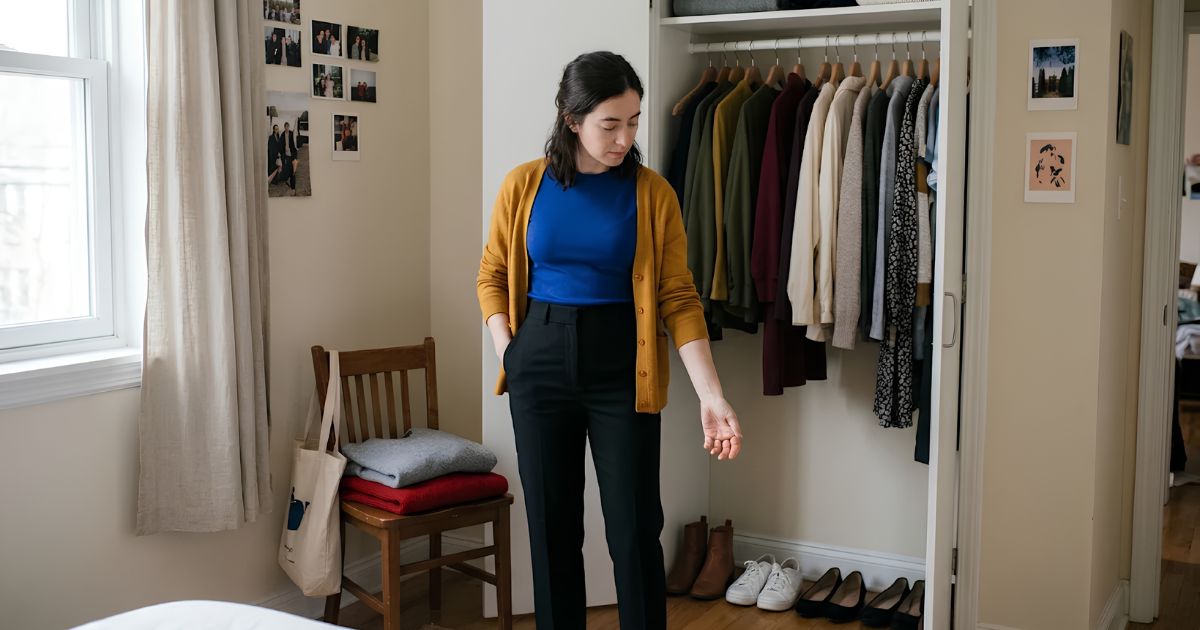
A good way to experiment with color blocking is to start with familiar clothing. A single colorful garment can transform an otherwise simple outfit.
Cobalt Blue and Bright Red
Blue and red make an energetic pairing that works well with everyday clothing.
Try a cobalt-blue sweater with straight–leg red trousers. For a more relaxed look, combine a red T-shirt with blue jeans and add a neutral jacket.
White sneakers, black flats, or simple leather accessories can finish the outfit without competing with the main colors.
For warmer weather, a blue skirt with a red sleeveless top is another option.
Pink and Green for an Unexpected Combination
Pink and green make a playful contrast, and the pairing works across many shades, from pale blush and sage to hot pink and emerald.
A pink button-down shirt with olive-green trousers is a simple starting point. The muted green tones down the brighter pink, which could suit casual offices, lunch dates, or weekend activities.
For a bolder look, try a hot-pink cardigan with a green midi skirt. Pastel pink and mint green offer a softer alternative.
Yellow and Blue for an Easy Everyday Outfit
Yellow and blue offer clear contrast in a simple two-color palette, making the pairing easy to try.
A mustard-yellow sweater with dark-blue denim is one alternative to an all-neutral outfit. The denim supplies a familiar base, and the yellow adds brightness.
For a more polished version, try a pale-yellow blouse with navy tailored trousers. Bright yellow and cobalt blue make a stronger statement, particularly when both garments have clean lines and minimal detailing.
Purple and Red for a Fashion-Forward Look
Purple and red are worth considering if you want to experiment beyond traditional pairings.
A burgundy top with a lavender skirt is a lower-contrast option, since neither shade is highly saturated. A bright-red sweater with purple trousers makes a more noticeable statement.
A purple cardigan over a red top lets you introduce the combination without making the whole outfit colorful.
Orange and Green for a Fresh Statement
Orange and green may seem difficult to combine, but the right shades can work together.
A burnt-orange shirt with olive trousers pairs two colors with earthy undertones. Brown leather accessories and simple shoes can complete the look.
For something brighter, combine a vivid orange top with emerald-green pants. Keeping accessories understated helps the colors stay the focus.
Three Ways to Make Color Blocking More Wearable
Not everyone wants to wear several bright colors at once. You can adapt color blocking to different preferences, wardrobes, and occasions.
Start With One Statement Piece
One approach is to let a single colorful garment become the focus of the outfit.
A bright-blue blazer can add color to a basic white shirt and black trousers. A vivid pink skirt can change a gray sweater, and a green cardigan can add color to a simple denim outfit.
One statement garment can combine with several pieces already in your closet, which keeps new purchases to a minimum.
Use Accessories to Introduce Contrasting Colors
Accessories let you try color combinations without buying several brightly colored garments.
A red handbag with a pink outfit, green shoes with a blue dress, or yellow earrings with a purple blouse can create a color-blocked effect.
Shoes are one way to add color at the bottom of an outfit. A white shirt and denim jeans, for instance, can take on a different look with orange flats and a green shoulder bag.
To tie an outfit together, try repeating one accessory color in a smaller detail elsewhere, such as the same red in your shoes and your top.
Mix Different Textures and Fabrics
Color is not the only element that shapes an outfit. Fabric texture and garment structure matter too.
Pairing a smooth satin skirt with a cotton T-shirt creates contrast, and a chunky knit cardigan softens the lines of tailored trousers.
Consider combining:
- A lightweight cotton shirt with a satin midi skirt.
- A structured blazer with relaxed denim.
- A ribbed sweater with flowing wide-leg trousers.
- A linen blouse with a leather-look skirt.
Varied textures can help separate individual pieces visually, so each color reads clearly.
How to Choose Color Blocking Combinations for Different Occasions
Color blocking isn’t limited to weekend outfits. You can adjust color intensity, garment silhouettes, and accessories to suit the setting.
Casual Outfits for Everyday Activities
For everyday dressing, combine one colorful item with familiar basics. A blue T-shirt with red sneakers and straight-leg jeans is a comfortable example.
Another option is a pink sweatshirt with olive-green cargo pants. For warmer days, try a yellow tank top with blue denim shorts or a green skirt with an orange blouse.
Work-Appropriate Color Blocking
Color blocking can add variety to office clothing. Tailored pieces and a limited palette fit naturally in professional settings.
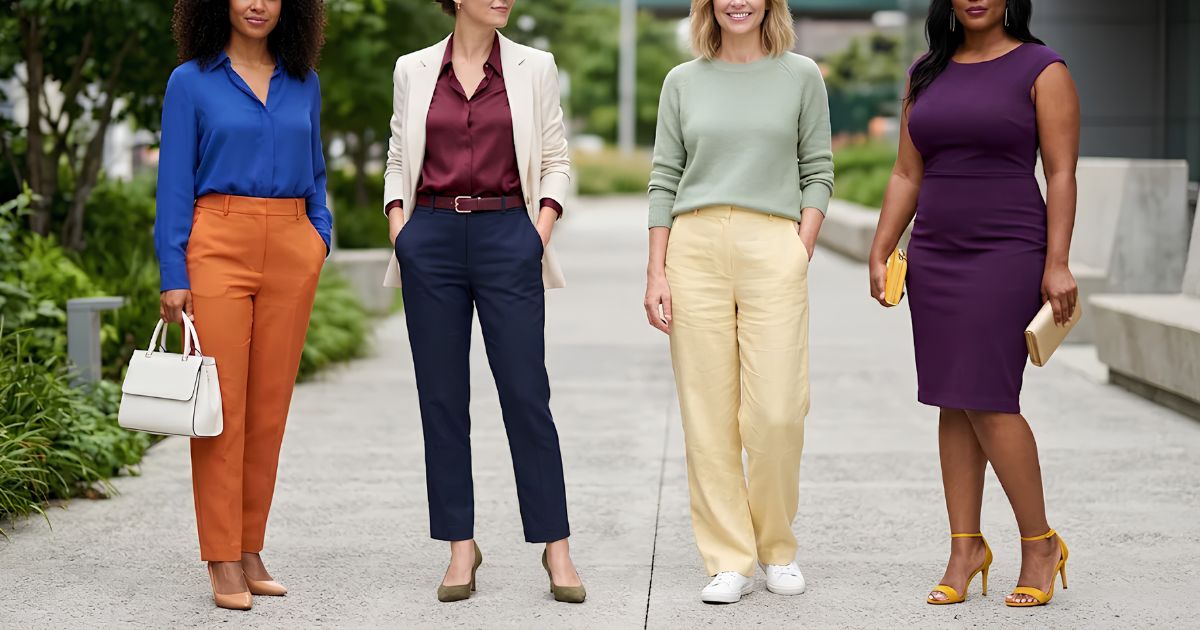
A burgundy blouse with navy trousers adds contrast while staying polished. A sage-green blazer over a cream top and brown trousers brings in color in a muted way.
For more relaxed workplaces, a cobalt-blue shirt with beige tailored pants is an alternative to conventional black-and-white combinations.
Evening and Special Occasion Outfits
Evening outfits leave more room for saturated colors and statement silhouettes.
A purple satin skirt with a red fitted top makes a striking combination, and a bright-pink dress with orange heels is playful.
For a more sophisticated feel, try an emerald-green dress with a purple clutch or a red dress with cobalt-blue accessories. With a statement dress, one or two contrasting accessories may be easier to balance than several.
Common Color Blocking Mistakes and How to Avoid Them
Color blocking encourages experimentation, but a few considerations can help an outfit feel intentional.
Combining too many bright shades: Several saturated colors without a clear plan can be hard to balance. Many stylists suggest keeping to two or three colors, so start with two before trying a third.
Ignoring color intensity: A neon shade and a dusty pastel can look disconnected because their saturation levels differ. Pair colors of similar intensity, or place a neutral between them.
Choosing competing accessories: Statement shoes, colorful handbags, oversized jewelry, and patterned scarves can compete for attention. Choose accessories that complement the main color combination.
Forcing colors to match perfectly: Color blocking isn’t about identical shades across every garment. Different tones can work well together when the overall combination feels deliberate.
Overlooking proportions: The amount of each color matters. If one shade is especially bright, giving it a smaller share of the outfit can make the combination easier to wear.
Make Everyday Clothes More Interesting With Color
Color blocking lets you rethink familiar wardrobe staples without matching sets or expensive new purchases. A pair of blue jeans with a colorful top, a contrasting cardigan, or statement shoes can make an outfit feel more intentional. Combinations don’t have to be the brightest to work. What matters is how color, proportion, fabric, and personal style fit together.
Instead of treating color combinations as strict rules, try different shades and see how they work with the clothes you already have. Start with two colors, add neutrals when needed, and explore more unexpected pairings over time.